


COVID-19 Testing Clinic in Columbus, OH
COVID-19 can cause a range of respiratory and general symptoms, and testing can help determine whether an active infection may be present. Timely testing may be especially helpful for individuals experiencing symptoms, concerned about recent exposure, or needing clarity about their current health status. At Scioto Urgent Care, Board-Certified Dr. William Rothe, M.D., and our medical team provide convenient COVID-19 testing along with appropriate medical evaluation and guidance based on each patient’s individual needs. For more information, contact us now or book an appointment. We are conveniently located at 4760 Sawmill Road Columbus, OH 43235.
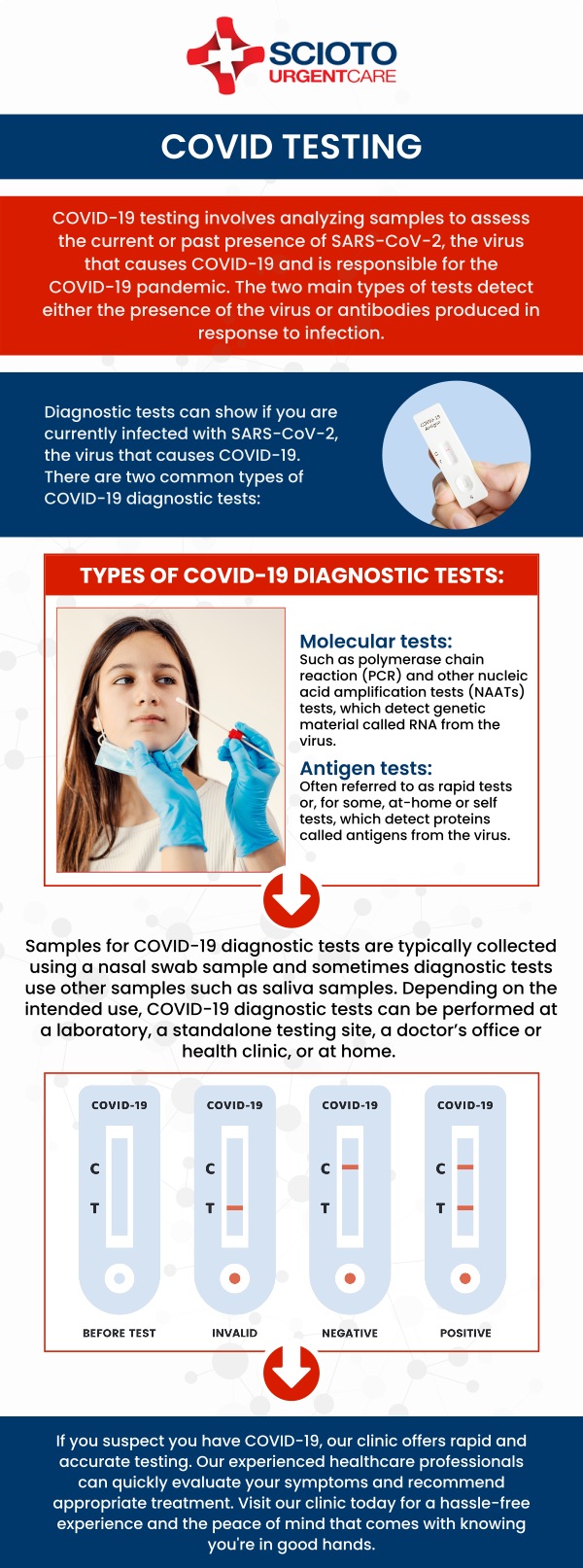
Table of Contents:
What is the difference between COVID-19 PCR testing and antibody testing?
When should you get COVID-19 PCR testing?
When is COVID-19 antibody testing appropriate?
Can COVID-19 antibody testing distinguish previous infection from vaccination?
How accurate are COVID-19 PCR and antibody tests?
What should you do if your COVID-19 test result is negative?
Can you get COVID-19 testing within 90 days of a previous infection?
What precautions should you follow before and after COVID-19 testing?
Are there any contraindications or safety concerns with COVID-19 PCR testing?
Is COVID-19 antibody testing safe, and are there any contraindications?
Who should seek medical attention promptly after developing COVID-19 symptoms?
When should you seek emergency care instead of urgent care COVID-19 testing?
Why visit Board-Certified Dr. William Rothe, M.D., and our team at Scioto Urgent Care in Columbus, OH, for COVID-19 testing?
COVID-19 PCR testing and antibody testing provide different information about SARS-CoV-2, the virus responsible for COVID-19.
• COVID-19 PCR testing is a molecular diagnostic test used to identify a current infection. It detects genetic material from the virus in a respiratory sample, commonly collected through a nasal swab. PCR testing is generally more sensitive than rapid antigen testing, although results must still be interpreted alongside symptoms and exposure history.
• COVID-19 antibody testing, also called serology testing, identifies antibodies produced by the immune system following an infection or vaccination. These tests typically require a small blood sample and may provide evidence of a previous immune response.
However, antibody testing cannot diagnose an active COVID-19 infection. It also cannot reliably establish whether someone is protected against future infection.
At Scioto Urgent Care, the appropriate testing approach should be determined by the clinical reason for testing rather than using PCR and antibody testing interchangeably.
PCR testing may be appropriate when someone has symptoms consistent with COVID-19 or when confirming a possible infection would help guide medical decisions.
Patients may benefit from diagnostic testing when they:
• Develop fever, cough, sore throat, congestion, or unusual fatigue.
• Experience body aches, headaches, or other respiratory symptoms.
• Have recently been exposed to someone with COVID-19.
• Receive a negative rapid antigen result despite continuing symptoms.
• Have underlying medical conditions that increase the risk of severe illness.
• Need a more sensitive diagnostic test based on clinical recommendations.
People experiencing COVID-19 symptoms should generally test promptly. Individuals without symptoms who have been exposed to the virus are generally advised to wait at least five full days after exposure before testing, unless a healthcare professional recommends a different approach.
Patients who develop symptoms before that time should not delay testing.
COVID-19 antibody testing may sometimes help identify evidence of an earlier SARS-CoV-2 infection or immune response. However, routine antibody testing is generally not recommended for people who simply want to determine whether they are immune to COVID-19.
Antibody testing has more limited clinical applications than diagnostic viral testing. It may be useful in selected circumstances when a healthcare professional needs additional information about previous exposure, or as part of the evaluation of certain post-infectious inflammatory conditions.
Important limitations of COVID-19 antibody testing include:
• Antibodies may take days to weeks to become detectable following infection.
• A negative antibody result does not necessarily exclude a previous infection.
• Antibody levels can decrease over time.
• Some antibody tests detect responses to vaccination rather than previous infection.
• A positive result does not establish protection against reinfection.
For these reasons, patients should discuss the intended purpose of antibody testing with a healthcare professional before undergoing the test.
Sometimes, but the answer depends on the specific antibodies being measured.
Some antibody tests detect antibodies directed against the spike protein of SARS-CoV-2. These antibodies may develop after vaccination or infection, meaning a positive result does not necessarily confirm a previous COVID-19 illness.
Other tests measure antibodies against the nucleocapsid protein. Detection of these antibodies generally suggests a previous natural infection in people who received commonly used U.S. COVID-19 vaccines. However, antibody levels may decline, and some vaccines used outside the United States can also produce nucleocapsid antibodies.
A healthcare professional should interpret antibody results based on the specific assay, vaccination history, timing, and clinical circumstances.
Antibody results should not be used to decide whether a patient needs COVID-19 vaccination or to measure how well a vaccine has worked.
Both testing methods have limitations, even when samples are collected and processed correctly.
PCR testing is generally highly sensitive for identifying SARS-CoV-2. However, false-negative results can occur if testing takes place very early in an infection, the sample is inadequate, or the amount of detectable viral material is low.
PCR tests can also remain positive for up to 90 days following an infection. This may happen because the test continues detecting viral genetic material after the period of infectiousness has passed.
Antibody testing has different limitations. Results depend on how much time has passed since infection or vaccination, which antibodies the test identifies, and the individual’s immune response.
Neither test can provide a complete picture of a patient’s current health or guarantee that the patient cannot transmit COVID-19.
A negative test result does not always exclude COVID-19, particularly when testing occurs early in an infection.
Patients who receive a negative PCR result but continue experiencing concerning symptoms should speak with a healthcare professional about whether additional evaluation is necessary.
For rapid antigen testing, FDA recommendations generally include:
• Patients with symptoms: At least two antigen tests performed 48 hours apart.
• Patients without symptoms: At least three antigen tests, with 48 hours between each test.
A molecular test may be used instead of repeat antigen testing when clinically appropriate.
Patients should continue appropriate respiratory precautions if they remain ill, even after receiving a negative COVID-19 test.
Yes, but the type of test matters.
A PCR test may remain positive for up to 90 days after an infection, even when the patient is no longer infectious. For this reason, the CDC recommends a different testing approach for people who have recently tested positive.
If the previous positive result occurred within the past 30 days, antigen testing is generally preferred when new symptoms develop. Testing to identify a new infection is generally not recommended for people without symptoms during that period.
Between 31 and 90 days after a positive result, antigen testing is the recommended approach when testing is indicated, with repeat testing after negative results according to FDA guidance.
Reinfection is possible during this period. Patients with new or worsening symptoms should seek appropriate clinical evaluation.
Taking appropriate precautions can reduce the risk of spreading respiratory infections to other patients, family members, and healthcare personnel.
Before visiting Scioto Urgent Care:
• Inform the clinic if you have respiratory symptoms or a recent positive COVID-19 test.
• Wear a well-fitting mask when appropriate and medically tolerated.
• Practice good hand hygiene.
• Avoid unnecessary close contact with other patients.
• Inform the medical staff about significant medical conditions or increased risk of severe illness.
After receiving a positive test result or developing respiratory symptoms:
Follow the CDC’s respiratory virus guidance. Stay home and away from others until, for at least 24 hours, your symptoms have been improving overall and you have been fever-free without fever-reducing medication.
When you resume normal activities, take additional precautions for the next five days. These may include wearing a well-fitting mask, improving indoor ventilation, practicing hand hygiene, maintaining distance, and testing before close contact with people at higher risk.
If you test positive without experiencing symptoms, use additional precautions for the next five days.
Patients with weakened immune systems may remain infectious longer and should seek individualized medical advice.
These community recommendations may differ from requirements for healthcare personnel and certain healthcare facilities.
COVID-19 nasal swab collection is generally safe, and there are no universal contraindications to diagnostic testing. However, some medical conditions require additional caution before collecting a sample.
Patients should inform the healthcare professional if they have:
• Recently undergone nasal or sinus surgery.
• Experienced recent nasal or facial trauma.
• A history of significant or recurrent nosebleeds.
• A bleeding disorder or use medications that increase bleeding risk.
• Severe nasal obstruction or marked nasal structural abnormalities.
• Previously experienced unusual pain or significant bleeding during nasal swab collection.
These conditions do not automatically prevent testing. A healthcare professional may modify the collection procedure or select another authorized specimen collection method when appropriate.
Common temporary effects of nasal swab collection include mild discomfort, sneezing, watery eyes, or nasal irritation. Minor bleeding can occasionally occur.
Severe pain, persistent bleeding, or unusual symptoms during collection should be reported immediately.
COVID-19 antibody testing is generally safe when performed using an appropriate blood collection method.
Depending on the specific test, blood may be collected through a fingerstick or venous blood draw.
Possible temporary effects include mild discomfort, bruising, or bleeding at the collection site. Some patients may experience dizziness or faintness during blood collection.
Before testing, patients should tell the healthcare professional about:
• Known bleeding disorders or significant bleeding concerns.
• Previous fainting during blood draws.
• Skin infections or inflammation near the intended collection site.
• Allergies to materials used during collection.
• Any medical condition that could complicate specimen collection.
These factors may require additional precautions but do not necessarily prevent antibody testing.
An important clinical limitation: Antibody testing should not replace diagnostic viral testing when an active infection is suspected.
Some individuals face a higher risk of serious complications from COVID-19 and should seek medical guidance early.
Higher-risk groups include older adults, people with weakened immune systems, and patients with certain chronic medical conditions, including heart disease, chronic lung disease, and diabetes. Pregnancy may also increase the risk of severe illness.
According to CDC guidance available, some treatments for eligible higher-risk patients must begin within five to seven days of symptom onset.
For this reason, patients at increased risk should seek medical evaluation promptly rather than waiting for symptoms to worsen or for repeated test results.
Treatment decisions depend on the patient’s clinical condition, eligibility, possible contraindications, and individual risk factors.
COVID-19 can occasionally cause serious respiratory or other medical complications. Certain warning signs require immediate emergency evaluation rather than a routine urgent care visit.
Call 911 or seek emergency medical attention if you experience:
• Severe difficulty breathing.
• Persistent chest pain or pressure.
• New confusion or sudden changes in awareness.
• Inability to wake up or remain awake.
• Pale, gray, or bluish lips, skin, or nail beds, depending on skin tone.
• Other severe or rapidly worsening symptoms.
Patients should never delay emergency medical care while waiting for a COVID-19 or antibody test result.
Board-Certified Dr. William Rothe, M.D., and our team at Scioto Urgent Care in Columbus, OH, provide COVID-19 testing in a clinical setting where patients can also receive an appropriate medical evaluation. Our dedicated team considers symptoms, possible exposure, health history, and other relevant concerns when determining suitable testing and next steps. This approach can be especially helpful for patients experiencing fever, cough, sore throat, fatigue, congestion, or other symptoms that may overlap with different respiratory illnesses.
Choosing Scioto Urgent Care also gives patients access to medical guidance beyond receiving a test result alone. Dr. William Rothe, M.D., and our team can discuss the findings, provide recommendations based on the patient’s condition, and determine whether additional evaluation may be appropriate. Our clinic focuses on making COVID-19 testing convenient, informative, and connected to individualized care for patients in Columbus, OH.
For more information, contact us or schedule an appointment online. We are conveniently located at 4760 Sawmill Road Columbus, OH 43235. We serve patients from Columbus OH, Dublin OH, Upper Arlington OH, Hilliard OH, Worthington OH, and surrounding areas.

Check Out Our 5 Star Reviews


Additional Services You May Need
▸ Asthma
▸ Abrasions
▸ Abdominal Pain
▸ Abscess Draining
▸ Bronchitis
▸ Back Pain
▸ Chest Pain
▸ Covid Testing
▸ COPD
▸ Camp Physicals
▸ Cold
▸ Drug Testing
▸ Ear Wax Removal
▸ Electrocardiography (EKG)
Additional Services You May Need
▸ Urgent Care
▸ Illness
▸ X-ray
▸ Abdominal Pain
▸ Lacerations
▸ Upper Respiratory Illness
▸ Sprains or Strains
▸ Asthma
▸ Sports Injuries
▸ Abscess Draining
▸ Pneumonia
▸ COPD
▸ Occupational Medicine
▸ Pre Employment Physicals
▸ Work Injuries
▸ Drug Testing
▸ Ear Wax Removal
▸ Minor Injuries
▸ Covid Testing
▸ Sports Physicals
▸ Work Physicals
▸ RSV Testing
▸ Electrocardiography (EKG)
▸ Skin Infection
▸ STD Testing
▸ Bronchitis
▸ Wound Care
▸ Abrasions
▸ Stitches
▸ Sports Medicine
▸ School Physicals
▸ Camp Physicals
▸ Skin Tag Removal
▸ Ingrown Toenail
▸ Chest Pain
▸ Minor Burns
▸ Strep Throat
▸ In House Lab Testing
▸ Back Pain
▸ Walk-In Medical Care
▸ Cold
▸ Flu


 Send Text
 How May I Help You?

